
By the Handled. ASL Interpreting Team | Last updated: November 2026
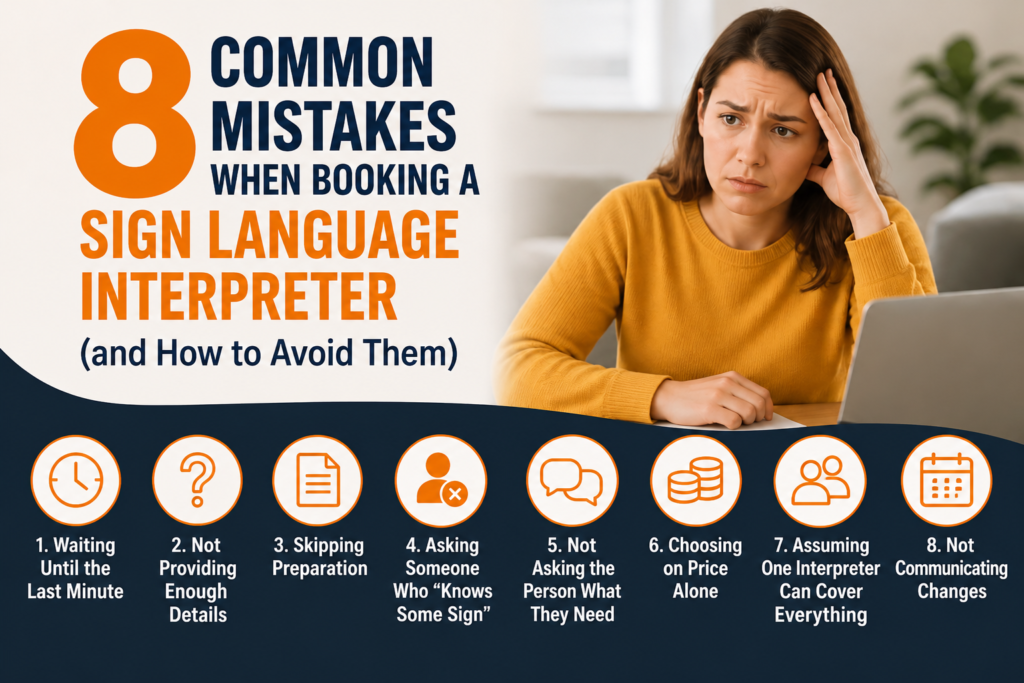
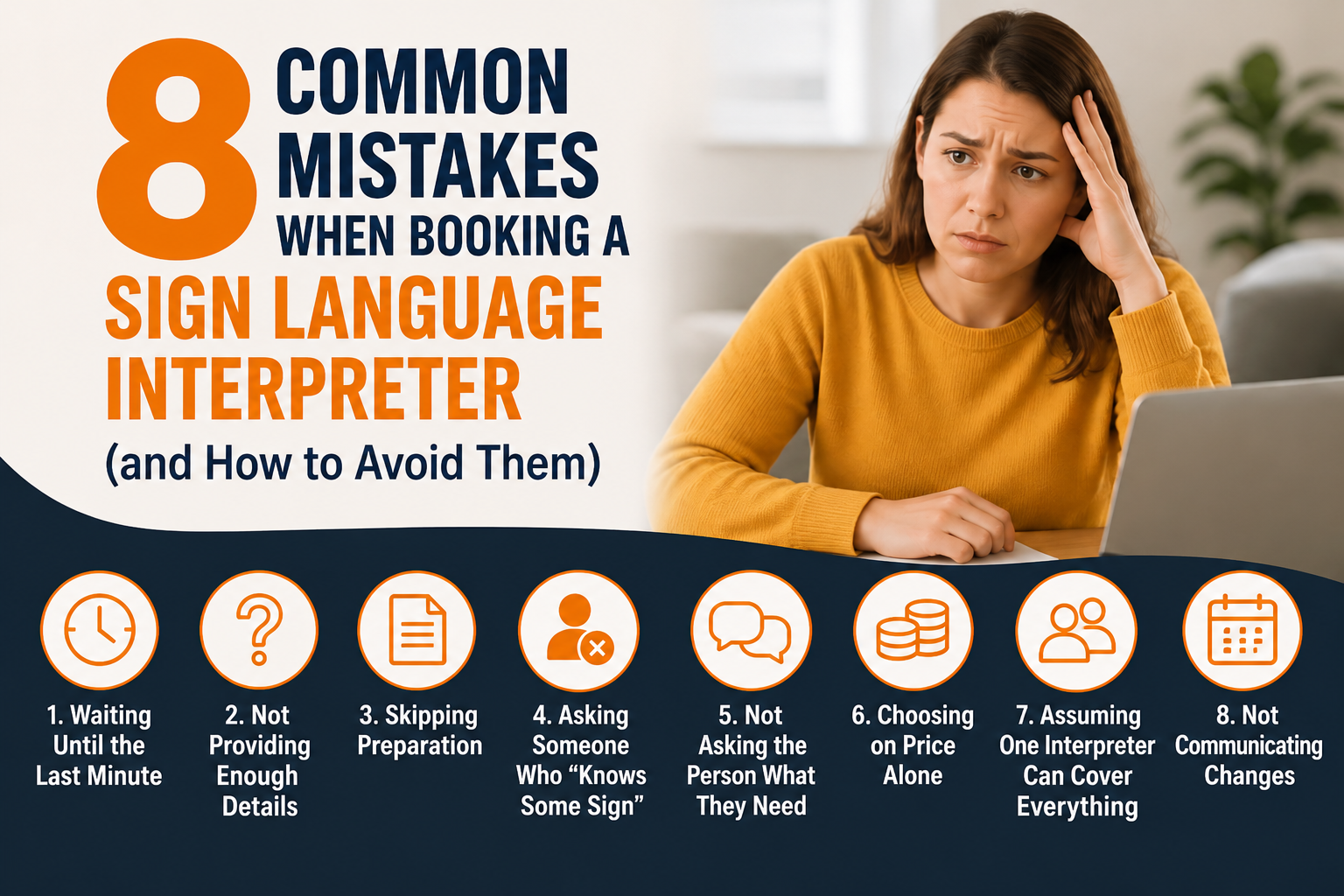
Booking an interpreter looks simple: pick a date, find a person, done. But small mistakes can leave a Deaf or Hard of Hearing person without access, frustrate your team, and cost you more than planned. Here are the mistakes we see most often, and how to avoid every one of them.
1. Waiting until the last minute
Experienced interpreters book up quickly, and last-minute requests mean fewer options and more stress.
Do this instead: Book as soon as you know the date. We recommend at least two weeks in advance, and for conferences, plan months ahead. Requests with less than one week’s notice are considered urgent. If you need services within two full business days, call us at 314-896-0ASL (0275) and we’ll get right to work. For a complete planning guide, download our free ebook, Accessibility & Accommodations Made Simple: The 2027 Guide.
2. Not sharing enough details
An interpreter can’t match the setting if they don’t know what it is. A request that just says “Tuesday at 2:00” leaves too many questions.
Do this instead: Include the date, start and end time (with time zone), location or meeting link, type of event, number of Deaf participants, an on-site contact, and any check-in, parking or security steps.
3. Skipping preparation
Interpreters work best when they know the topic. Technical terms, acronyms and names are much easier to interpret accurately when they’ve seen them first.
Do this instead: Share whatever you have, even a simple agenda, slides or a list of speaker names. We’ll do our best to prepare with whatever is available.
4. Asking someone who “knows some sign”
A coworker who took an ASL class, or a family member, may mean well, but they aren’t trained interpreters. Interpreting takes fluency in two languages and professional skill. Many states also have their own rules. Missouri, for example, requires interpreters to hold state-recognized certification and a license, and Illinois requires a license too.
Do this instead: Work with a provider that knows the requirements in each state and sends credentialed, experienced professionals.
5. Not asking the person what they need
Deaf and Hard of Hearing people don’t all communicate the same way. One person uses ASL, another prefers live captions, and some situations call for a Certified Deaf Interpreter on the team.
Do this instead: Ask the person who will use the service. They’re your best guide, and government entities must give primary consideration to their request.
6. Choosing on price alone
The lowest quote can turn into the most expensive choice.
From our work: One organization chose the lowest-cost provider, a company that didn’t specialize in sign language interpreting. The interpreters it sent weren’t qualified for the event, and no one gave them prep materials or clear details. On the day, they couldn’t keep up, some walked out, and the event was left without the access it promised. The organization still paid for the services it booked, and its attendees paid the real price.
Do this instead: Compare providers on matching, preparation and planning, not just the hourly rate.
7. Assuming one interpreter can cover everything
Some assignments are longer, faster-paced or more complex than one interpreter can handle accurately. When fatigue sets in, important details get missed.
Do this instead: Share the length, agenda and format when you book. When the situation calls for it, we’ll recommend a team so access stays accurate from start to finish. Why Does My Event Need Two ASL Interpreters?
8. Not communicating changes
Plans change. But a moved start time, new room or new link that never reaches the interpreter can leave the person without access.
Do this instead: Let us know about any change as soon as you know. We’ll update your team and make sure everyone has what they need.
Frequently Asked Questions (FAQS)
What happens if we need to cancel?
Let us know as soon as possible. Like any professional service, cancellation fees may apply, and we’ll confirm the terms when you book.
Can we ask the Deaf person to bring their own interpreter?
No. You can’t require a person to bring their own interpreter, and family and friends shouldn’t interpret except in narrow emergencies. Providing a qualified interpreter is the organization’s responsibility.
Can we charge the Deaf person for the interpreter?
No. The cost of an accommodation can’t be passed on to the person who needs it. Plan for interpreting and captioning as part of doing business.
Skip the stress. Tell us about your assignment, and we’ll handle the rest. [Request Services] or call 314-896-0ASL (0275).
About Handled. ASL Interpreting: Handled. ASL Interpreting, a DBA of MT & Associates, LLC, provides ASL interpreting, live captioning and video accessibility services from St. Louis to clients nationwide. Founded by Shelly Tisius, RID-NIC, MICS5/BEI-Master.