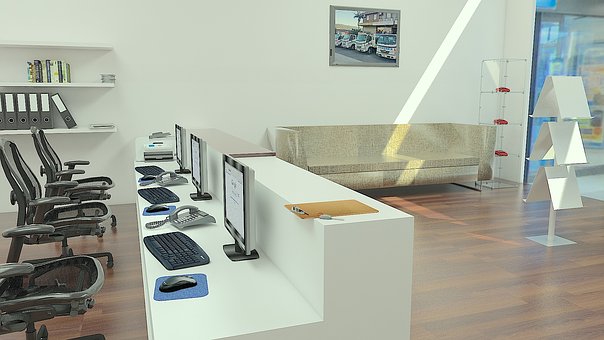
Modern office with desks and computers

Workplace and educational architecture has developed immensely in the last 100 years.  You will find many new office spaces and college campuses more open and inviting in their blueprints.  This is a benefit not only to the daily associate or student, but it especially impacts those who have low/no vision or use sign language.

Gallaudet University in Washington D.C. is the only university in the world where all its programs are geared towards Deaf and hard-of-hearing students using a bilingual approach in English and American Sign Language (ASL).  They use an innovative approach to education and specifically to architecture.  In 2005, Hansel Bauman officially established the term Deaf Space and its specifications.  This allows for full visual accessibility in a given environment.

Why DeafSpace?

Gallaudet University describes the purpose of Deaf Space in the following way:

Deaf people inhabit a rich sensory world where vision and touch are a primary means of spatial awareness and orientation. Many use sign language, a visual-kinetic mode of communication and maintain a strong cultural identity built around these sensibilities and shared life experiences. Our built environment, largely constructed by and for hearing individuals, presents a variety of surprising challenges to which deaf people have responded with a particular way of altering their surroundings to fit their unique ways-of-being.  This approach is often referred to as DeafSpace. (DeafSpace)

DeafSpace RequirementsDeaf Space
Before Bauman created the DeafSpace Project (DSP), the concept of visual accessibility still existed in places like Deaf clubs and homes.  Alarm clocks and door bells that flash lights instead of make sounds, round tables instead of rectangle ones, and other visual considerations have been implemented for many years.  But the specifications for building a structure and rooms geared towards visual ease did not take root until Bauman’s creation of the DSP.

There are five requirements when building DeafSpace architecture that must be taken into consideration.

  1. Sensory Reach
  2. Space and Proximity
  3. Mobility and Proximity
  4. Light and Color
  5. Acoustics

Read about what each aspect includes in detail here.

Check out this video for what Deaf Space looks like.

What Can I Do?

Whether you need accessible spaces yourself or work with someone who does, you can make an environment more visually friendly by following the concepts of Deaf Space.  As stated by Gallaudet, most architectural work is done by people who can hear.  There is little to no consideration for visibility.  With awareness, we can increase the use of Deaf Space concepts.  Think of things like, can everyone see who is talking, are the lights too dim/bright, could the chairs be put in a circle instead of rows, or is there a larger room we could use for openness?

Feel free to contact MT&A for more information on how to use Deaf Space to be more visually friendly, and read here about how to listen to your clientele’s expertise in this area.


Additional Resources:

https://www.curbed.com/2016/3/2/11140210/gallaudet-deafspace-washington-dc

https://www.gallaudet.edu/about/news-and-media/fast-facts

http://www.chronicle.com/article/Video-DeafSpace-by-Design/237275


Photo Credit:

https://pixabay.com/en/render-3d-design-office-open-space-2001817/
shelly-headshot-3-brand.webp

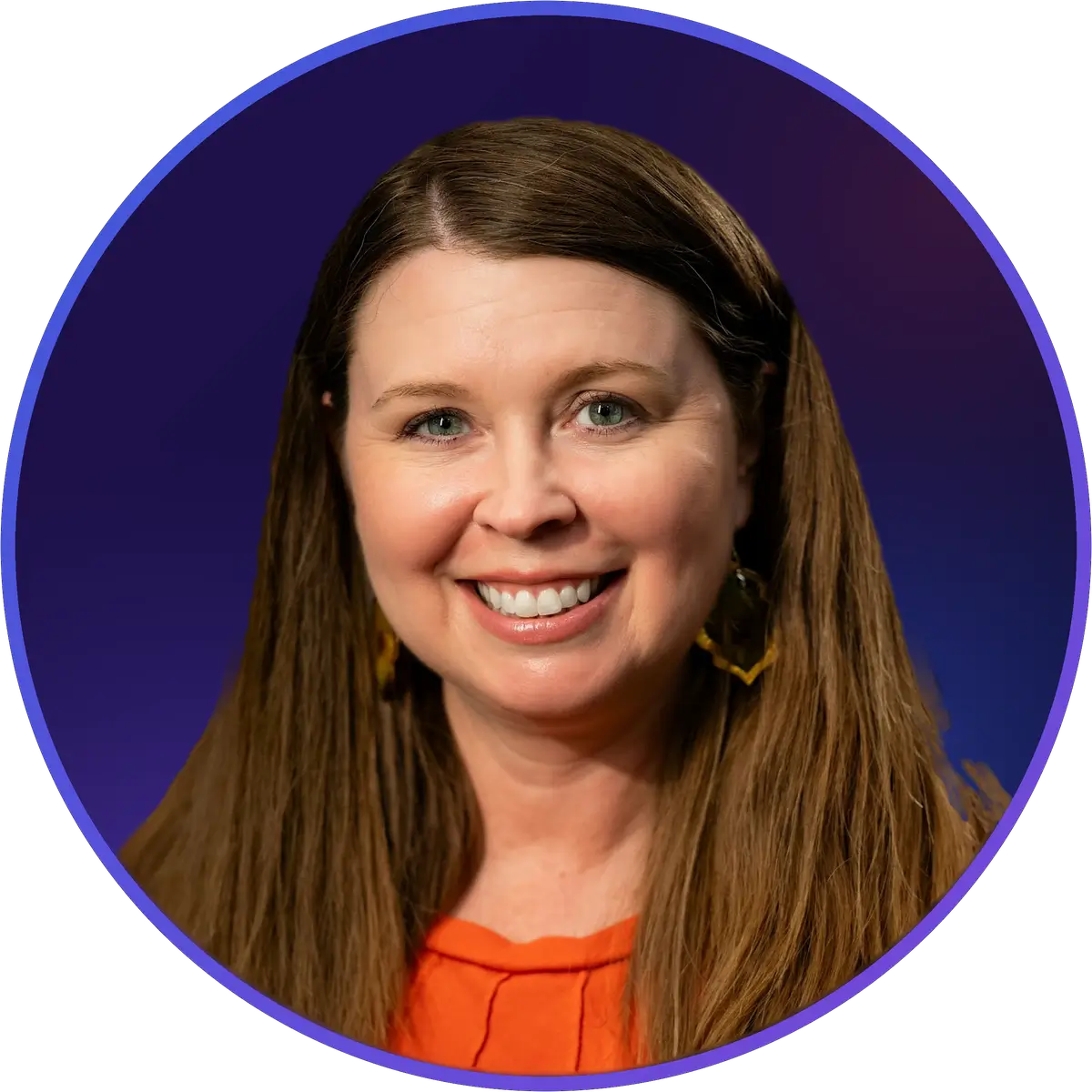
Shelly Tisius (she/her), RID-NIC, MICS5/BEI-Master

Founder, CEO, and ASL Interpreter

I've been leading teams since long before I became a professional interpreter in 2002, and I worked my own way through school, so I know what it means to build something from the ground up. In 2013 I founded MT & Associates, now Handled. ASL Interpreting, and today I lead how we work, so every detail is handled for our clients.

Categories

Tablet showing an online Create Your Calm workshop

The Communication Access Planning Guide

A free starter guide to planning interpreting and captioning for your event, campus, agency, or workplace. Learn how much notice to give, what each service does, and how to book with confidence. Every guide includes a section for your audience, so you get what’s relevant to you.

Blue circular icon of an I love you handshape

Communication access shouldn't be one more thing to figure out.

See how our ASL interpreting, live captioning, and audio description services can support your event, campus, agency, or workplace. Consider it handled.

Shelly Tisius, Founder and CEO

Shelly Tisius (she/her),
RID-NIC, MICS5/BEI-Master

Founder, CEO, and ASL Interpreter

I’ve been leading teams since long before I became a professional interpreter in 2002, and I worked my own way through school, so I know what it means to build something from the ground up. I’ve done every part of this work, and I love it all. In 2013 I founded MT & Associates, now Handled. ASL Interpreting, and today I lead how we work, so every detail is handled for our clients.

Outside of work, I’m a proud military spouse and mom, usually on the go with my kids.

Bryce Buckley, Operations Manager

Bryce Buckley (he/him)

Operations Manager

As a first-generation college student supporting myself through school, I developed a passion for helping others access the resources and support they need. After several years advocating for students and their families in higher education, I now bring that same commitment to my role as Operations Manager at Handled. ASL Interpreting. I am honored to support our mission of serving the Deaf community and helping people feel heard, understood, and connected.

Bryce spends much of his free time crocheting, bowling, at the gym, with friends, and spending time with his partner and chihuahua, Mabel.

Rain Pioquinto, HR and Social Media Specialist

Rain Pioquinto

HR & Social Media Specialist

Rain Pioquinto helps keep day-to-day operations organized, assists with team and office needs, and supports Handled. ASL Interpreting marketing and communications. She enjoys working behind the scenes, keeping things running smoothly, and finding ways to make everyday processes easier for the team.

Outside of work, she loves spending time at home with her family, occasionally tending to her garden, and enjoying a good cup of coffee.

Caleb Miller, Operations Coordinator

Caleb Miller, BEI Basic

Operations Coordinator

Caleb Miller brings over a decade of experience working alongside the Deaf community to his role as Coordinator. As a certified interpreter (BEI - Basic), he loves applying the skills and insights he has gathered over the past 10+ years to ensure smooth, successful language access for everyone.

Outside of the office, Caleb loves spending quality time with his wife, Natalie, and their two dogs, Marnie and Winnie. When he isn't out on the disc golf course, you can usually find him tackling a good home project in his spare time.

Shannon Veneziani, Operations Coordinator

Shannon Veneziani

Operations Coordinator

Shannon Veneziani helps clients and interpreters know what to expect before every assignment. Whether she's confirming where to meet for a class or finding coverage when a schedule changes, she makes sure everyone has the details they need. Before joining the team, Shannon spent a decade in the coffee industry, managing shops and training new managers across several states. That experience sparked a passion for operations and taught her that the best plans leave room for change, and the questions that are easy to overlook are often the most important ones.

Outside of work, Shannon is usually at the gym, with her family or at home with her cavapoo, Willie. And yes, she can still make you a great cup of coffee.

Scroll to Top