
Sign Language Interpreter Organization

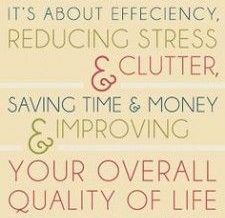
Text graphic about reducing stress and clutter, saving time and money, and improving quality of life
By Angelica Bechtold

It is so much easier to maintain sign language interpreter organization than it is to begin.  But how do we begin?  As a fairly new sign language interpreter, I had piles of information from school to sort through.  This included many different agencies and my notes on them from various interpreters (staff vs. independent contractor [IC], mileage information, which agencies pay weekly, bi-weekly, once a month, etc.).   As a student, I was meticulous in gathering all the information available to me.  Some was accumulated through my Interpreter Training Program (ITP) and teachers.  Other information was from interpreters I had the opportunity to have as mentors during my practicum classes.  

So, now I’m out here as a new interpreter and have a mass of information…  What to do with it all?  How to become organized and maintain that organization?  Of all the wonderful things I had learned about interpreters, being highly organized was not a reputation many of us had earned.  Here are some tips that have helped me thus far.

Making Your Schedule

You may pick up a few ongoing jobs or prefer to pick up jobs from week to week with little ongoing work.  Whatever your preference, you will most certainly need a reliable calendar.  Some people prefer paper calendars; others prefer Google.  You have to figure out what works best for you.  Many (but not all) agencies use Google Calendar.  This has many advantages including easy access to assignment information (location, time) and simplified invoicing.  However, Google Calendar has crashed in the past and all information could be lost just as quickly.  

Also, some of the agencies do not use Google at all.   If you are taking work through multiple agencies, and prefer Google Calendar, you must be sure to put all the accurate information in yourself if it is not provided when you accept work.  I’ve found that using both paper and Google Calendar works best for me.  I color code my agencies in Google and match that color in my paper calendar with the time and address.  I do not keep any other identifying information on paper in order to maintain confidentiality.  It is vital to protect our clients and ourselves by maintaining strict confidentiality and upholding our Code of Professional Conduct. I do this by keeping my phone locked and not including the client’s name in my planner.

A place for everything and everything in it’s placeSign Language Interpreter Organization

It is vital that we have a dedicated space to sit down and do our paperwork.  Seemingly no one enjoys paperwork.  However, in our profession, our paperwork means getting paid or not getting paid.  As an IC, no one else is responsible for your invoicing.  If you do not have a set time and place to figure out what is owed to you, likely, it will not get completed; or it will get completed at an inconvenient time, in a rushed and unprofessional manner.  As much as we do not enjoy being paid late, agencies do not enjoy receiving random or multiple emails related to our payroll because we did not realize what day it is due.

It is a good practice to sit down weekly and look through your calendar to see who you have worked for and who you should be invoicing that week.  Every agency has their own schedule for payroll.  I have made several folders in Gmail to keep all payroll and other information separate and clear for myself. Some examples of folder headings and subheadings that may be helpful for you are:

  1. Agencies:

-MT&A (Agency name)

  -Payroll

  -Contract/Handbook Info

  -Rate

2. Invoices:

-Paid

-Pending payment

3. Certification/Licensure:

-CEUs

-RID Professional Code of Conduct


Conclusion

Organization is a must to be successful in our profession. It may be difficult to begin sign language interpreter organization, but the benefits are worth it. Once you have a system for yourself, it will become rote. It will simplify and improve your profession and life.


Additional Resources:

From Interpreting Student to Professional Interpreter

Community Sign Language Interpreting Career


Photo Credit: https://www.pinterest.com/pin/33847434674027679/

shelly-headshot-3-brand.webp

Shelly Tisius (she/her), RID-NIC, MICS5/BEI-Master

Founder, CEO, and ASL Interpreter

I've been leading teams since long before I became a professional interpreter in 2002, and I worked my own way through school, so I know what it means to build something from the ground up. In 2013 I founded MT & Associates, now Handled. ASL Interpreting, and today I lead how we work, so every detail is handled for our clients.

Categories

Tablet showing an online Create Your Calm workshop

The Communication Access Planning Guide

A free starter guide to planning interpreting and captioning for your event, campus, agency, or workplace. Learn how much notice to give, what each service does, and how to book with confidence. Every guide includes a section for your audience, so you get what’s relevant to you.

Blue circular icon of an I love you handshape

Communication access shouldn't be one more thing to figure out.

See how our ASL interpreting, live captioning, and audio description services can support your event, campus, agency, or workplace. Consider it handled.

Shelly Tisius, Founder and CEO

Shelly Tisius (she/her),
RID-NIC, MICS5/BEI-Master

Founder, CEO, and ASL Interpreter

I’ve been leading teams since long before I became a professional interpreter in 2002, and I worked my own way through school, so I know what it means to build something from the ground up. I’ve done every part of this work, and I love it all. In 2013 I founded MT & Associates, now Handled. ASL Interpreting, and today I lead how we work, so every detail is handled for our clients.

Outside of work, I’m a proud military spouse and mom, usually on the go with my kids.

Bryce Buckley, Operations Manager

Bryce Buckley (he/him)

Operations Manager

As a first-generation college student supporting myself through school, I developed a passion for helping others access the resources and support they need. After several years advocating for students and their families in higher education, I now bring that same commitment to my role as Operations Manager at Handled. ASL Interpreting. I am honored to support our mission of serving the Deaf community and helping people feel heard, understood, and connected.

Bryce spends much of his free time crocheting, bowling, at the gym, with friends, and spending time with his partner and chihuahua, Mabel.

Rain Pioquinto, HR and Social Media Specialist

Rain Pioquinto

HR & Social Media Specialist

Rain Pioquinto helps keep day-to-day operations organized, assists with team and office needs, and supports Handled. ASL Interpreting marketing and communications. She enjoys working behind the scenes, keeping things running smoothly, and finding ways to make everyday processes easier for the team.

Outside of work, she loves spending time at home with her family, occasionally tending to her garden, and enjoying a good cup of coffee.

Caleb Miller, Operations Coordinator

Caleb Miller, BEI Basic

Operations Coordinator

Caleb Miller brings over a decade of experience working alongside the Deaf community to his role as Coordinator. As a certified interpreter (BEI - Basic), he loves applying the skills and insights he has gathered over the past 10+ years to ensure smooth, successful language access for everyone.

Outside of the office, Caleb loves spending quality time with his wife, Natalie, and their two dogs, Marnie and Winnie. When he isn't out on the disc golf course, you can usually find him tackling a good home project in his spare time.

Shannon Veneziani, Operations Coordinator

Shannon Veneziani

Operations Coordinator

Shannon Veneziani helps clients and interpreters know what to expect before every assignment. Whether she's confirming where to meet for a class or finding coverage when a schedule changes, she makes sure everyone has the details they need. Before joining the team, Shannon spent a decade in the coffee industry, managing shops and training new managers across several states. That experience sparked a passion for operations and taught her that the best plans leave room for change, and the questions that are easy to overlook are often the most important ones.

Outside of work, Shannon is usually at the gym, with her family or at home with her cavapoo, Willie. And yes, she can still make you a great cup of coffee.

Scroll to Top