

Chronic ear infections in children can cause hearing loss and speech delays. Learn the signs and how early intervention supports healthy development.
Are you all ears right now? Ear infections are an issue where the crossroads of speech, language, hearing, and medicine meet.
We have all heard of selective hearing. Sometimes, it is confused with hearing loss. Now, we aren’t talking about your spouse not hearing you when you ask them to take out the trash, or your teenager suddenly not understanding when you want to talk with them about their grades. Instead, we are talking about what happens when a person has chronic ear infections, and their hearing can be affected either long term or short term. To identify potential concerns, hearing patterns should be observed in different environments, types of activities, and with a variety of people.
The Hidden Impact of Chronic Ear Infections on Children’s Hearing, Speech, and Language Development
Hoping to myth-crush, here: “It’s just another ear infection. Kids have them all the time. “ Yes, and no. Let’s talk about some key information:
Ear infections are a common childhood ailment, but when they occur frequently, or when they do not resolve, there can be long-term consequences. Chronic ear infections come with discomfort, a disruption in hearing, and can even cause issues with balance. Medically known as recurrent otitis media, they do more than just cause discomfort. They can significantly affect a child’s hearing, which in turn influences speech and language development during the most critical early years of learning.
What Are Chronic Ear Infections?
Otitis media is an infection or inflammation of the middle ear, usually caused by bacteria or viruses. When a child experiences three or more ear infections within six months, or four or more within a year, the condition is considered chronic (American Academy of Pediatrics, 2013).
How Ear Infections Affect Hearing
During an ear infection, fluid often builds up behind the eardrum, muffling sound and causing temporary hearing loss. With chronic infections, this can become a repeated or ongoing issue, interfering with the child’s ability to hear clearly during everyday interactions.
Even mild, fluctuating hearing loss due to ear infections can make it difficult for children to distinguish speech sounds, especially in noisy environments like classrooms (Roberts et al., 2004). This type of hearing loss is usually conductive, meaning sound is physically blocked from passing efficiently through the middle ear.
The Link to Speech and Language Delays
Children learn to speak and understand language by hearing the words spoken around them. When ear infections interrupt that input—especially during the first 3 years of life, when the brain is most sensitive to language development—it can delay their ability to:
- Pronounce words correctly
- Use age-appropriate vocabulary
- Understand spoken language
- Follow directions
- Build social communication skills
Research has shown that children with recurrent otitis media are at increased risk for language delays, particularly if the condition is not promptly treated or if it occurs during critical periods of speech acquisition (Yoshinaga-Itano, 2003).
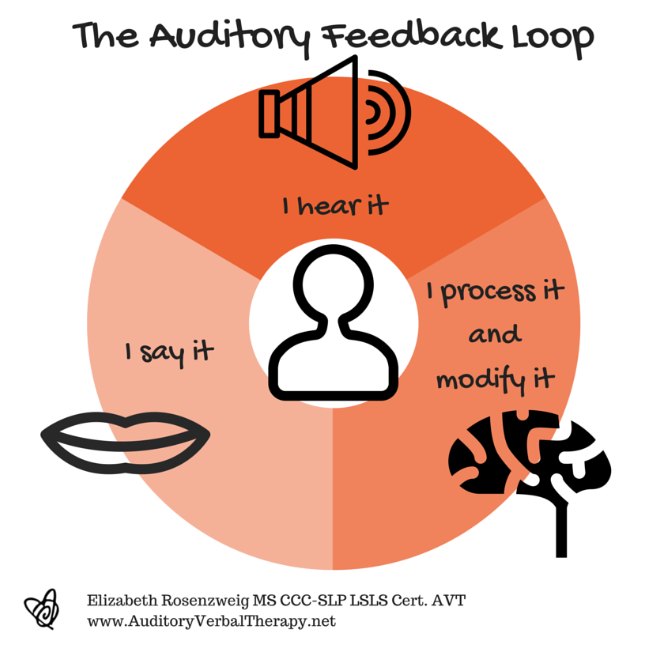
The graphic below is from one of the foremost professionals in the world of speech-language pathology and audiology. This simple visual shows the complex nature of how speech, language, and hearing are interconnected and influence each other:
Behavioral and Academic Effects
Because children with chronic ear infections may not always hear clearly, they might seem inattentive or uncooperative, leading to misunderstandings about their behavior. Over time, this can affect their confidence, peer interactions, and academic readiness, especially in reading and writing (Teele et al., 1990).
When to Seek Help
If your child has frequent ear infections, watch for signs of hearing or communication difficulties:
- Difficulty understanding or following instructions
- Delayed speech milestones
- Saying “what?” or asking for repetition frequently
- Trouble with pronunciation or unclear speech
- Lack of response to quiet sounds or spoken name
In these cases, your child may benefit from a hearing evaluation by an audiologist and a speech-language screening. Early intervention can significantly improve outcomes and help children catch up in their development.
Treatment and Prevention
Treatment for chronic ear infections might include:
- Antibiotics or ear drops
- Placement of ear tubes to drain fluid
- Monitoring by an ENT specialist
- Ongoing hearing tests to assess any loss
- Speech therapy if delays are identified
Parents can also help by keeping children away from tobacco smoke, managing allergies, encouraging handwashing, and ensuring up-to-date vaccinations to prevent infections.
Conclusion
Chronic ear infections are more than a temporary illness as they can have a lasting impact on how children hear, speak, and learn. If your child experiences frequent ear infections, don’t wait. Talk to your pediatrician, consider a hearing test, and seek a speech-language screening if needed. Early action can make all the difference in your child’s development.
References
- American Academy of Pediatrics. (2013). The Diagnosis and Management of Acute Otitis Media. https://pediatrics.aappublications.org
- Roberts, J. E., Rosenfeld, R. M., & Zeisel, S. A. (2004). Otitis media and speech and language: A meta-analysis of prospective studies. Pediatrics, 113(3), e238-e248.
- Teele, D. W., Klein, J. O., Rosner, B. A. (1990). Otitis media with effusion during the first three years of life and development of speech and language. Pediatrics, 85(4), 480–485.
- Yoshinaga-Itano, C. (2003). From screening to early identification and intervention: Discovering predictors to successful outcomes for children with significant hearing loss. Journal of Deaf Studies and Deaf Education, 8(1), 11–30.