
Power Positions Effect on Educational Interpretation

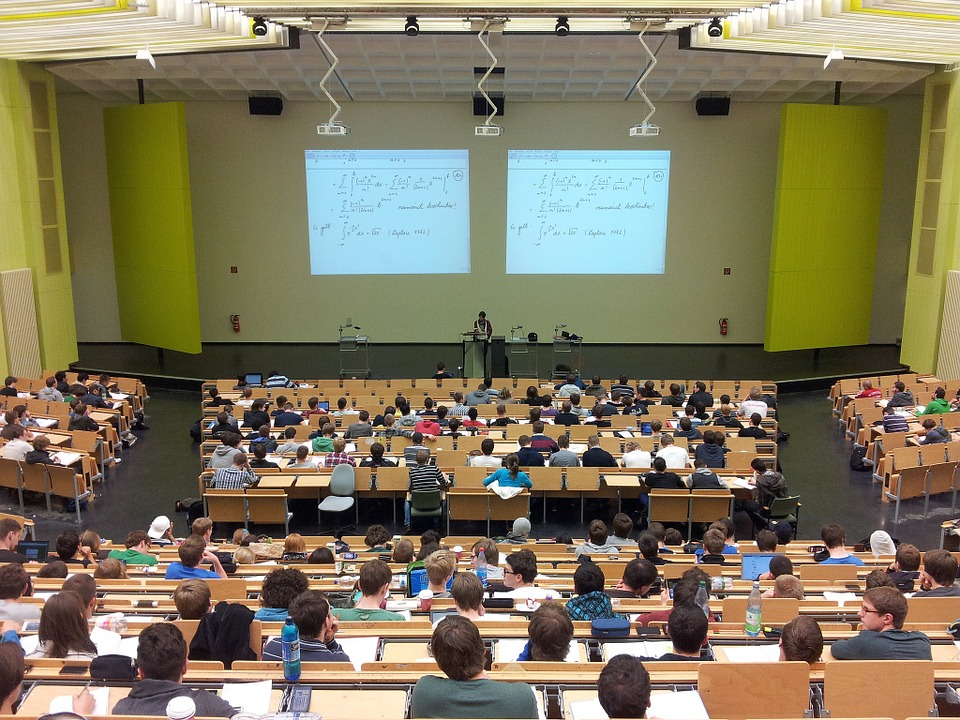
Lecture hall full of students

Power Position Effects on Educational Interpretation

As discussed in Outcomes of Power Positions in Sign Language Interpreting as well as in Medical and Business interpreting, we now consider the power position effects on educational interpretation.  As a reminder, collaboration and partnerships should occur in all sign language interpretation.

Disclaimer:  Examples are provided for reflection purposes only and may be “extreme” examples for that purpose.  Examples are not real life scenarios, and any similarities to real persons or scenarios should not be inferred.

A Deaf Student in a College Classroom

Position 1: Sign Language Interpreter in the Power PositionPower Position Effects on Educational Interpretation

The sign language interpreter arrives in the classroom early and decides where they will sit or stand.  When the Deaf student arrives, the
interpreter tells the Deaf student where they need to sit if they intend to see the interpreter.

Once the class begins, the sign language interpreter sometimes responds to questions to which they know the answers.  They exclude the Deaf student from socializing or answering on their own behalf.

During group work, the sign language interpreter socializes with students in a personal manner not enabling the Deaf student to interact.  They do not interpret all small talk between themselves and the students.

At the end of the class the sign language interpreter leaves without acknowledging the Deaf student.

Position 2: Deaf Student in the Power Position

The sign language interpreter arrives in the classroom early and sets up a “temporary” position of where they will sit or stand.  When the Deaf student arrives, they immediately direct the interpreter on where to sit or stand.

Once the class begins, the sign language interpreter does not acknowledge the Deaf student’s questions as quickly as the student would like.  So the Deaf student takes time during class to train the sign language interpreter on how they should interpret.

During group work, the sign language interpreter makes friendly small talk with the other students and interprets what is said.  The Deaf student does not wait for the interpretation but interrupts the small talk and requests that everything being said also be interpreted.

At the end of the class, the Deaf student leaves without acknowledging the sign language interpreter.

Position 3: Teacher in the Power Position

The sign language interpreter arrives in the classroom early, and the teacher informs them where they will sit or stand to interpret.  The teacher also makes several demands as to when the interpreter should and should not interpret.  When the Deaf student arrives, the teacher continues make their expectations known to the interpreter.  They exclude the Deaf student from the conversation.

Class begins, and the teacher controls whose questions will be answered.  They sometimes ignore the Deaf student’s raised hand, not always calling on them.  The teacher may address the interpreter instead of the Deaf student.

During group work, the Deaf student is not put into a group because they cannot hear.  The teacher also states that putting the sign language interpreter into the group would make the groups too large and would be disruptive.

Conclusion

Power position effects on educational interpretation are detrimental to the Deaf student’s learning process.  Additionally, they may cause embarrassment when in a classroom setting with several participants.  This teaches others that treating anyone this way is appropriate and “okay.”


Additional Resources:

Sign Language Interpreting in the Classroom


Photo Credit:

https://pixabay.com/en/university-lecture-campus-education-105709/

shelly-headshot-3-brand.webp

Shelly Tisius (she/her), RID-NIC, MICS5/BEI-Master

Founder, CEO, and ASL Interpreter

I've been leading teams since long before I became a professional interpreter in 2002, and I worked my own way through school, so I know what it means to build something from the ground up. In 2013 I founded MT & Associates, now Handled. ASL Interpreting, and today I lead how we work, so every detail is handled for our clients.

Categories

Tablet showing an online Create Your Calm workshop

The Communication Access Planning Guide

A free starter guide to planning interpreting and captioning for your event, campus, agency, or workplace. Learn how much notice to give, what each service does, and how to book with confidence. Every guide includes a section for your audience, so you get what’s relevant to you.

Blue circular icon of an I love you handshape

Communication access shouldn't be one more thing to figure out.

See how our ASL interpreting, live captioning, and audio description services can support your event, campus, agency, or workplace. Consider it handled.

Shelly Tisius, Founder and CEO

Shelly Tisius (she/her),
RID-NIC, MICS5/BEI-Master

Founder, CEO, and ASL Interpreter

I’ve been leading teams since long before I became a professional interpreter in 2002, and I worked my own way through school, so I know what it means to build something from the ground up. I’ve done every part of this work, and I love it all. In 2013 I founded MT & Associates, now Handled. ASL Interpreting, and today I lead how we work, so every detail is handled for our clients.

Outside of work, I’m a proud military spouse and mom, usually on the go with my kids.

Bryce Buckley, Operations Manager

Bryce Buckley (he/him)

Operations Manager

As a first-generation college student supporting myself through school, I developed a passion for helping others access the resources and support they need. After several years advocating for students and their families in higher education, I now bring that same commitment to my role as Operations Manager at Handled. ASL Interpreting. I am honored to support our mission of serving the Deaf community and helping people feel heard, understood, and connected.

Bryce spends much of his free time crocheting, bowling, at the gym, with friends, and spending time with his partner and chihuahua, Mabel.

Rain Pioquinto, HR and Social Media Specialist

Rain Pioquinto

HR & Social Media Specialist

Rain Pioquinto helps keep day-to-day operations organized, assists with team and office needs, and supports Handled. ASL Interpreting marketing and communications. She enjoys working behind the scenes, keeping things running smoothly, and finding ways to make everyday processes easier for the team.

Outside of work, she loves spending time at home with her family, occasionally tending to her garden, and enjoying a good cup of coffee.

Caleb Miller, Operations Coordinator

Caleb Miller, BEI Basic

Operations Coordinator

Caleb Miller brings over a decade of experience working alongside the Deaf community to his role as Coordinator. As a certified interpreter (BEI - Basic), he loves applying the skills and insights he has gathered over the past 10+ years to ensure smooth, successful language access for everyone.

Outside of the office, Caleb loves spending quality time with his wife, Natalie, and their two dogs, Marnie and Winnie. When he isn't out on the disc golf course, you can usually find him tackling a good home project in his spare time.

Shannon Veneziani, Operations Coordinator

Shannon Veneziani

Operations Coordinator

Shannon Veneziani helps clients and interpreters know what to expect before every assignment. Whether she's confirming where to meet for a class or finding coverage when a schedule changes, she makes sure everyone has the details they need. Before joining the team, Shannon spent a decade in the coffee industry, managing shops and training new managers across several states. That experience sparked a passion for operations and taught her that the best plans leave room for change, and the questions that are easy to overlook are often the most important ones.

Outside of work, Shannon is usually at the gym, with her family or at home with her cavapoo, Willie. And yes, she can still make you a great cup of coffee.

Scroll to Top