
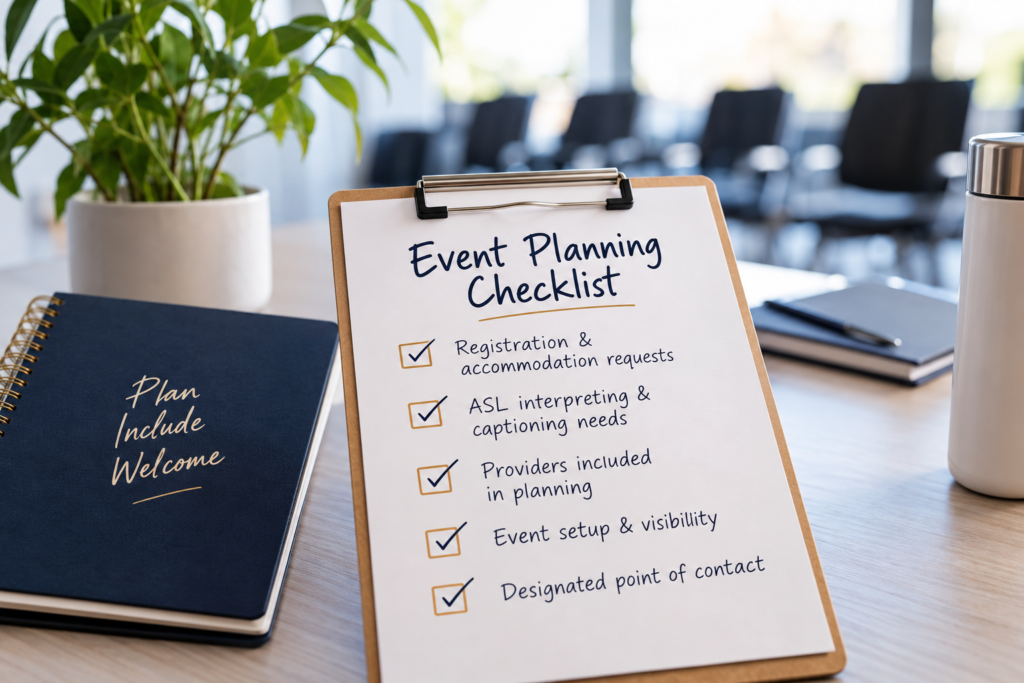
 Planning an event involves many moving parts, from booking a venue to coordinating speakers and technology. But one important detail deserves attention from the start: communication accessibility.
Whether you’re organizing a conference, corporate meeting, training, community event, or professional gathering, planning for communication access early can help create a more inclusive experience for everyone.
Here are five questions to consider as you prepare for your next event.
1. Can attendees easily request accommodations?
Include a clear way for attendees to share their accessibility needs during registration. This gives your team more time to coordinate appropriate services and make necessary arrangements before the event.
2. Have you considered interpreting and captioning needs?
Depending on attendees’ communication preferences, your event may require American Sign Language (ASL) interpreting, CART (Communication Access Realtime Translation), or other communication accommodations.
Avoid assuming that one solution works for everyone. Consider your audience and the communication options that will best support their participation.
3. Are your accessibility providers included in event planning?
Sharing schedules, presentation materials, speaker information, and relevant terminology with your interpreting or captioning team ahead of time can help them prepare for the assignment.
Including your providers in the planning process also gives everyone an opportunity to address questions before event day.
4. Have you considered the event setup?
Accessibility involves more than booking a service.
Consider where interpreters will be positioned, whether attendees will have a clear line of sight, how captions will be displayed, and how communication access will be maintained during breakout sessions, audience questions, and other interactive activities.
A little planning can make a meaningful difference in the attendee experience.
5. Does your team know who is responsible for accessibility?
Assign someone to coordinate accessibility details and communicate with the appropriate team members and service providers.
Having a clear point of contact helps keep everyone informed and reduces the chance of important details being overlooked.
Make Accessibility Part of the Plan
Accessible events don’t happen by accident. They happen when communication access is considered alongside the venue, speakers, technology, registration, and other event essentials.
At MT & Associates, we provide ASL interpreting and captioning services to help organizations support communication access at meetings, conferences, trainings, and other events.
Planning an upcoming event?
Make communication access part of the conversation from the start.